Budgeting
DIY vs. Professional Painting: What Do You Really Save?

DIY painting saves you the labor line on a quote — nothing else. A professional interior job runs $2,800–$7,500 depending on scope, and most of that number is time and skill, not the can of paint. Do it yourself and you keep that labor cost, but you take on the tools, the time, and the risk of redoing sections that don't hold up.
Whether that trade is worth it depends less on the wall and more on what your weekends are actually worth to you (an economic concept every painter has quietly calculated while standing on a ladder at 9pm on a Sunday).
What DIY Actually Cuts From the Bill
A professional quote bundles labor, prep, materials, and a warranty into one number. DIY removes the labor line — the crew's time — and leaves everything else for you to source and do correctly. That's the entire trade: hours for dollars, with no guarantee the hours produce the same result.
- Labor — the largest line item on any quote, and the one DIY removes entirely.
- Warranty — professional jobs carry a written warranty (2-year on interior work); a DIY repaint carries none.
- Rework risk — if prep is skipped or rushed, you're paying in a second weekend, not a second invoice.
The Tools Nobody Prices Into the DIY Number
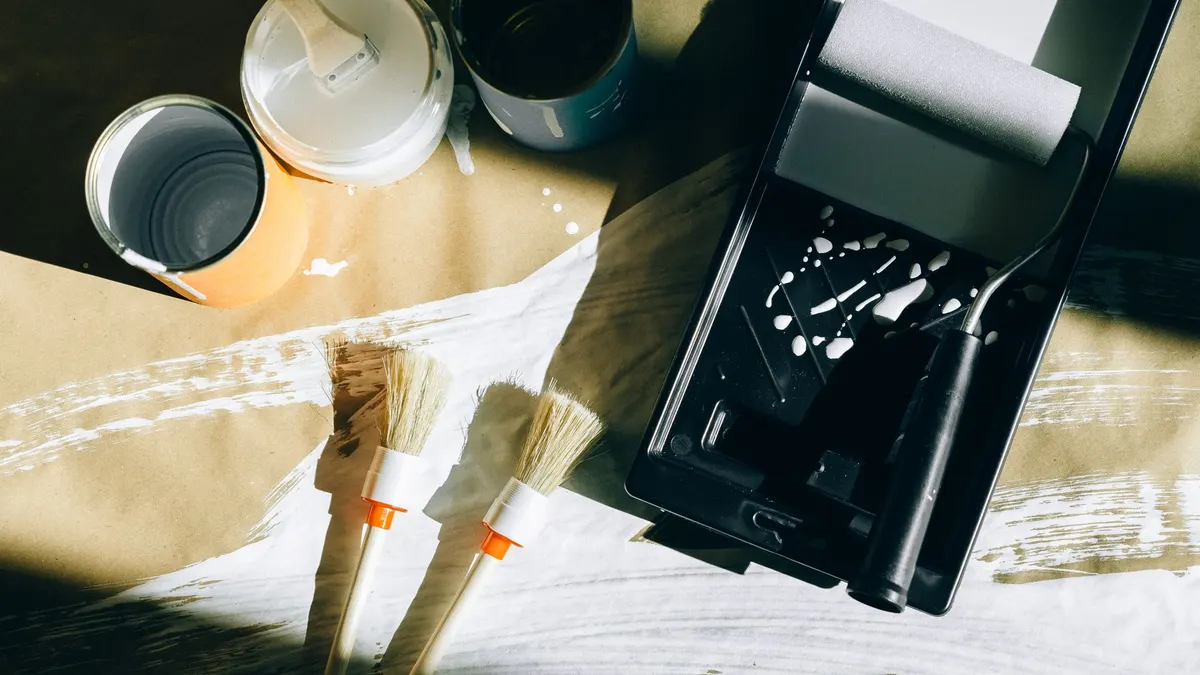
Painters show up with a truck already stocked. A first-time DIY job means buying or renting drop cloths, extension poles, a quality brush and roller set, sandpaper, painter's tape, and a ladder tall enough for ceilings and stairwells — costs that don't show up in the sticker price of a gallon of paint.
None of this is prohibitively expensive on its own. It adds up when you total it against the labor you're supposedly saving, especially if half of it sits in the garage after one project instead of getting reused across dozens of jobs the way it does for a working crew.
Time Is the Real Cost, Not the Paint
A crew of two or three finishes an average interior job in 2–4 days because that's the job, full time, with the right tools already in hand. A homeowner doing the same room alone, around a full-time job, usually stretches that into multiple weekends — prep one weekend, first coat the next, trim and touch-ups the one after that.
That's not a criticism of DIY. It's the actual trade you're making: your calendar for the crew's invoice. If your weekends are already spoken for, the math tilts toward professional fast — no algebra required, just a look at your calendar.
Where Rework Quietly Eats the Savings
Prep time predicts paint lifespan more than the paint brand does. That's true whether a professional or a homeowner does the prep — sanding, patching, priming — but a first-time DIY job is far more likely to skip a step under time pressure, and skipped prep is what shows up as peeling or patchy coverage six months later, not on the day the roller goes back in the garage.
Redoing a wall because the first coat failed doesn't just cost the second round of paint. It costs the exact weekend you were trying to save in the first place — which is the one part of DIY math that never makes it onto a napkin.
When DIY Actually Makes Sense
DIY is the right call for a single low-stakes room, a rental you're not planning to stay in long-term, or a homeowner who genuinely enjoys the process and has the weekends to give it. It's a worse fit for exteriors, ceilings, anything requiring a tall ladder, or a home built before 1978 where lead-safe prep practices matter — the EPA's Renovation, Repair, and Painting rule covers why that's not a DIY-friendly shortcut on older homes.
If you're on the fence, browse the full service breakdown to see what's actually included in a professional scope before deciding which parts, if any, you'd rather hand off.
Questions Answered
DIY vs. Professional Painting, Answered
It saves the labor line specifically, which is usually the largest part of a quote. It doesn't remove the cost of tools, materials, or the time spent — and rework from skipped prep can erase the savings entirely.
Written By
USA Pro Painters TeamHomeowner Success Team, USA Pro Painters
10 years connecting homeowners with licensed, insured local painters nationwide, backing 500+ completed projects. Writes from real matches and real jobs, not a marketing calendar.